How we redesigned candidate screening and increased search adoption by 73.80% and filter usage by 14x
Summary
Recruiters were spending most of their day "fighting" with the screening screen: to find the right candidates, they had to navigate through huge lists, filter everything manually, and remember configurations in their heads.
Because of this, filters were rarely used, search barely helped, and the screening flow didn't make it clear what the next step should be, resulting in slow, repetitive, and inconsistent screenings among recruiters, increasing support tickets with questions about how search and filters worked.
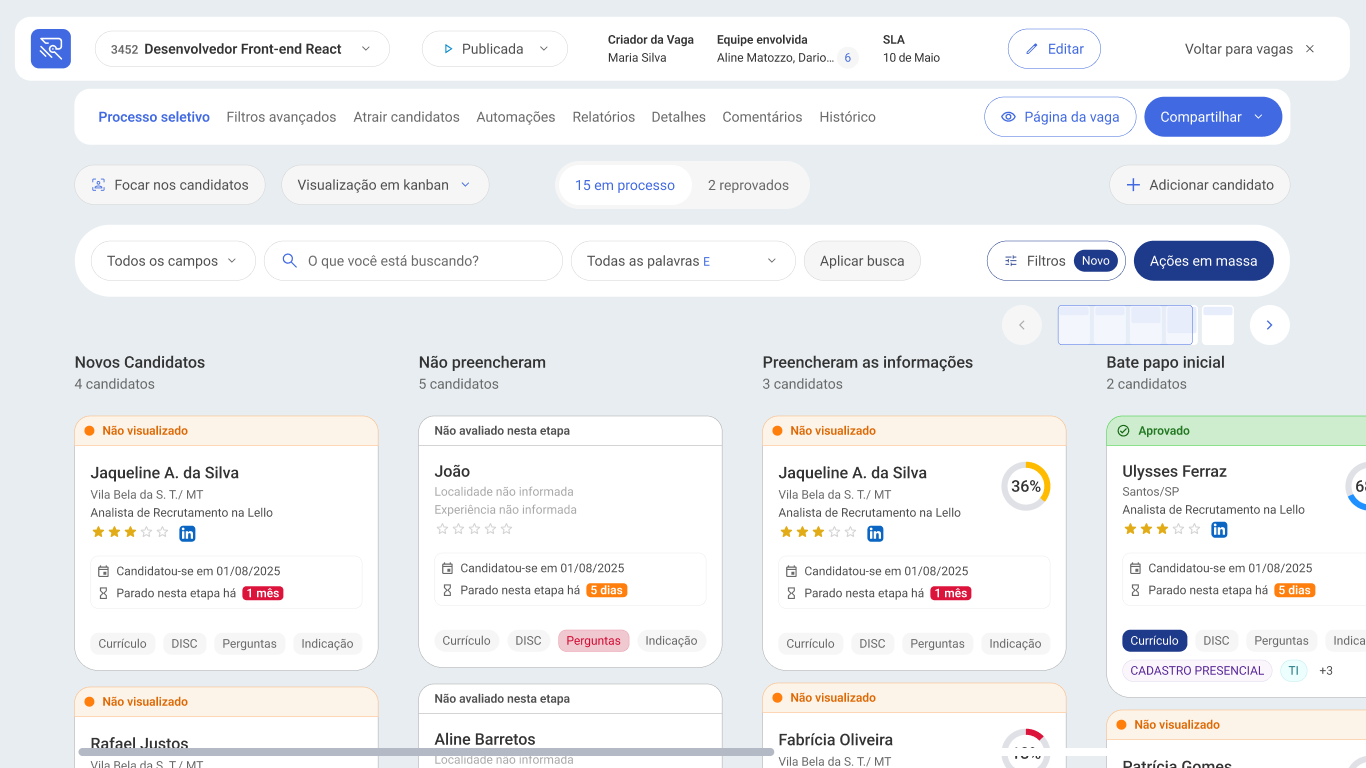
Based on usage data and interviews, I mapped this daily routine, identified key friction points, and redesigned the screening screen as a true decision dashboard: contextual search aligned with recruiter vocabulary, smarter and more predictable filters, cards highlighting only critical information, and clear candidate states.
After the redesign, search and filters became part of the real screening routine: there was a 73.8% increase in search usage, 14x more filter usage, and a reduction of about 26% in average screening time per session, making the process faster, predictable, and sustainable for the recruitment team.
Beyond the numbers, recruiters reported that it became much easier to understand what stage each candidate is in and to set up appropriate filters for each job.
Design process
Discovery
- Desk Research
- Benchmark
- Heuristic Evaluation
- Usability Testing of existing experience
- Quantitative Research
Ideation
- Opportunity Tree
- Wireframes
Development
- Interactive Prototypes
- Usability Testing
Delivery
- Documentation
- Handoff
Challenge
Very low usage of filters and search
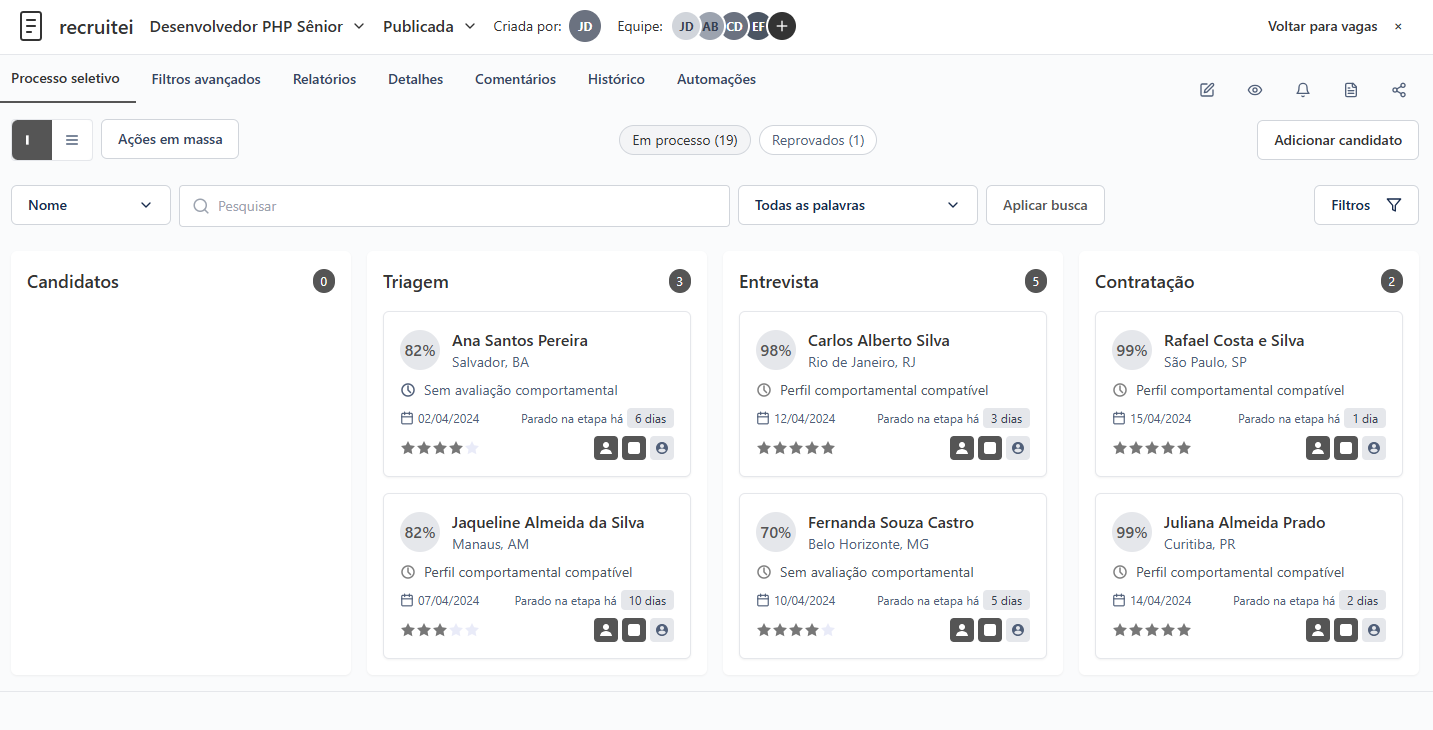
Recruiters were avoiding using the ATS filters and search, precisely the functionality that should speed up their work.
Many support tickets
The growing volume of support tickets signaled something beyond simple technical questions.
Quantitative Research Results
Usage Frequency
Result Accuracy
Lack of trust in results
Through assisted usability tests, quantitative research, and heuristic analysis, we discovered the core of the problem: users did not trust the presented results.
Lack of clarity on applied filters
The interface did not make it clear which filters were applied, generating doubts like 'am I losing qualified candidates?' and 'are these results really filtered?'.
Identified in usability tests
Not used due to lack of trust
Users do not use filters or search because they don't find them useful or don't understand how they work.
Impact: Underutilized resources may indicate failure to meet user needs.
Filter function is unclear
The source filter and name-only search caused confusion as it wasn't clear which options were available.
Impact: Users might avoid using this filter and search due to lack of clarity.
Recruiters took up to 3x
longer to screen candidates
The result?
An essential functionality for effective recruitment was being underutilized, forcing recruiters to manually scroll through endless lists of candidates, exactly what filters should avoid.
Making the invisible visible
The solution was to turn uncertainty into clarity
We completely rethought the search component and filters, creating a system where users could know exactly what they were filtering at any moment, and importantly, trust the presented results.
Made with AI
Low-fidelity interactive prototype for testing the new solution
Contextual Search Field
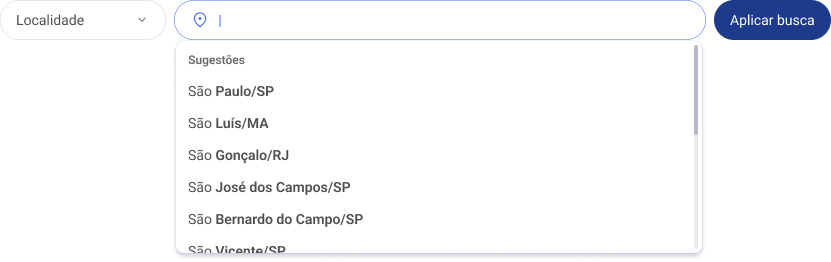
Users showed difficulty with AND/OR conditionals in search, generating frustration when results didn't match expectations.
So we simplified the flow:
Search by Name
Automatic AND for full names

Search by Location
Automatic OR for full names and autocomplete
Search by All Fields
OR and AND as search options

The technical complexity remains,
but now behind the scenes.
Result: 73.8% increase in search usage.
Screening Filters
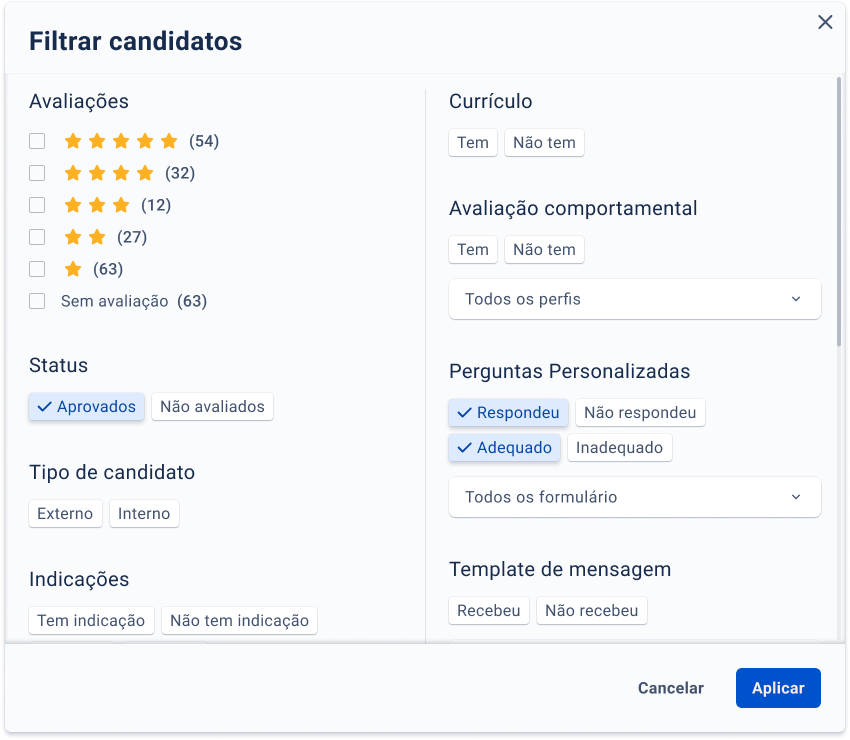
Recruiters found filters that didn't reflect the real screening context: little control, unpredictable results, and 'empty' searches. So we redesigned the experience: expanded truly useful options, organized everything into clear categories, and added counters. Now, the impact of each choice is immediately visible.
New Filters
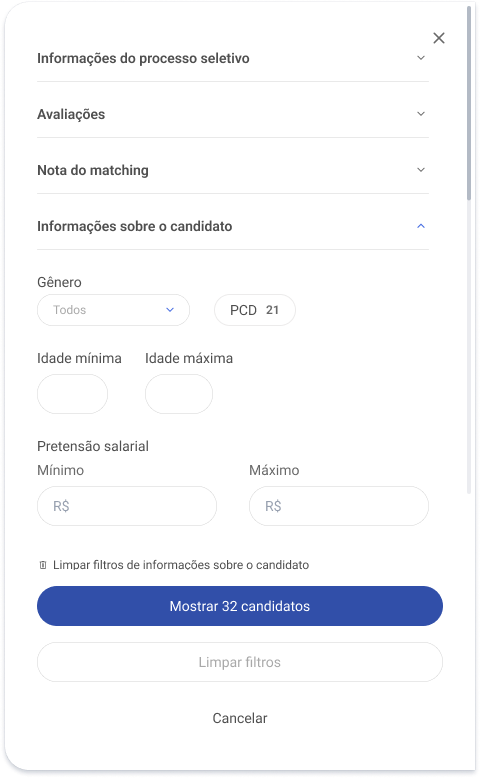
We included some candidate information filters such as:
- Gender
- Age
- Salary Expectation
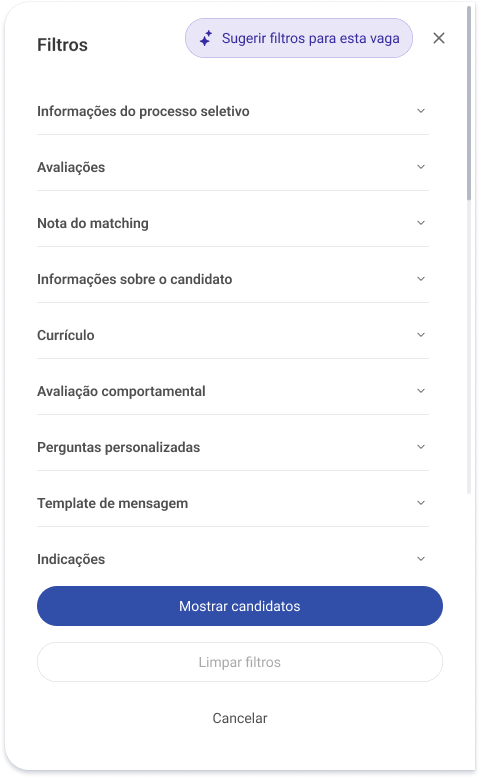
Categories
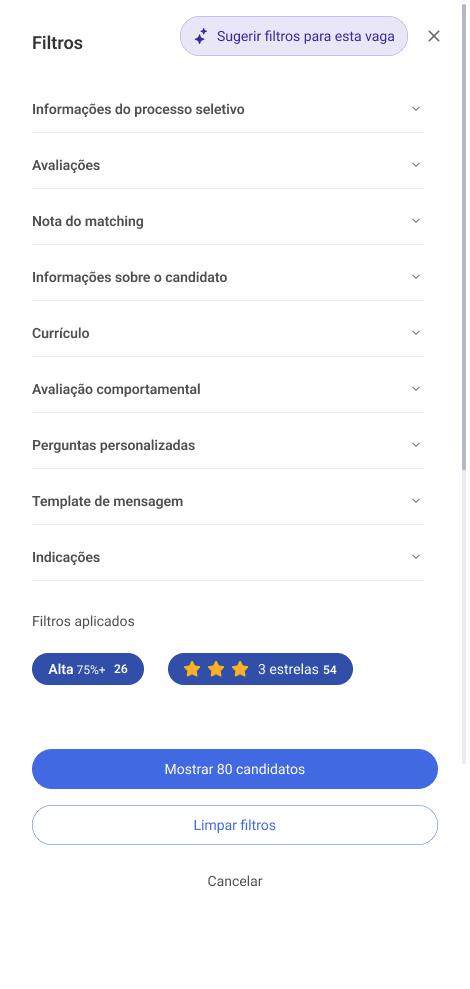
To improve information architecture, we organized filters by categories:
- Process Information
- Evaluations
- Matching Score
- Resume
- Behavioral Assessment
- Custom Questions
Filter Counters
To ensure result predictability and avoid 'empty' searches, we created counters to show the result before searching in 2 places:
- On each filter
- On the show results button
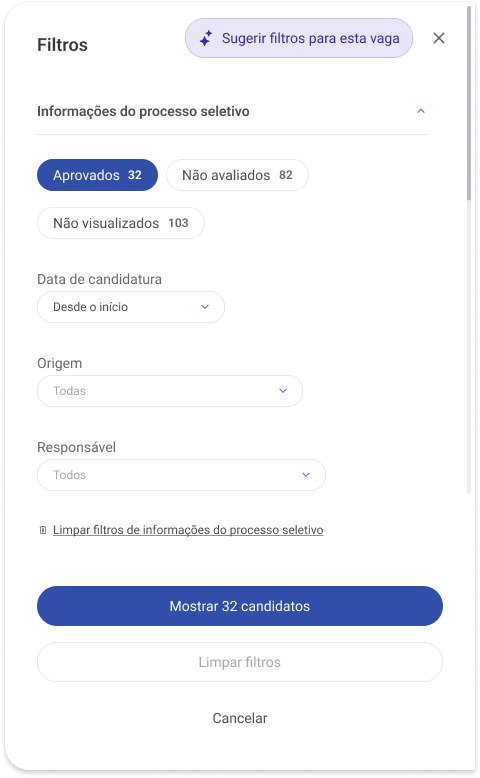
AI to Speed Up Screening
Besides new options, we created a way to further optimize screening with our AI via a button to suggest filters based on job specifications.

Logic became invisible and choice, evident: clear categories, new criteria, counters, one-click AI = optimized screening
Result: filters received 14x more interactions.
Redesign
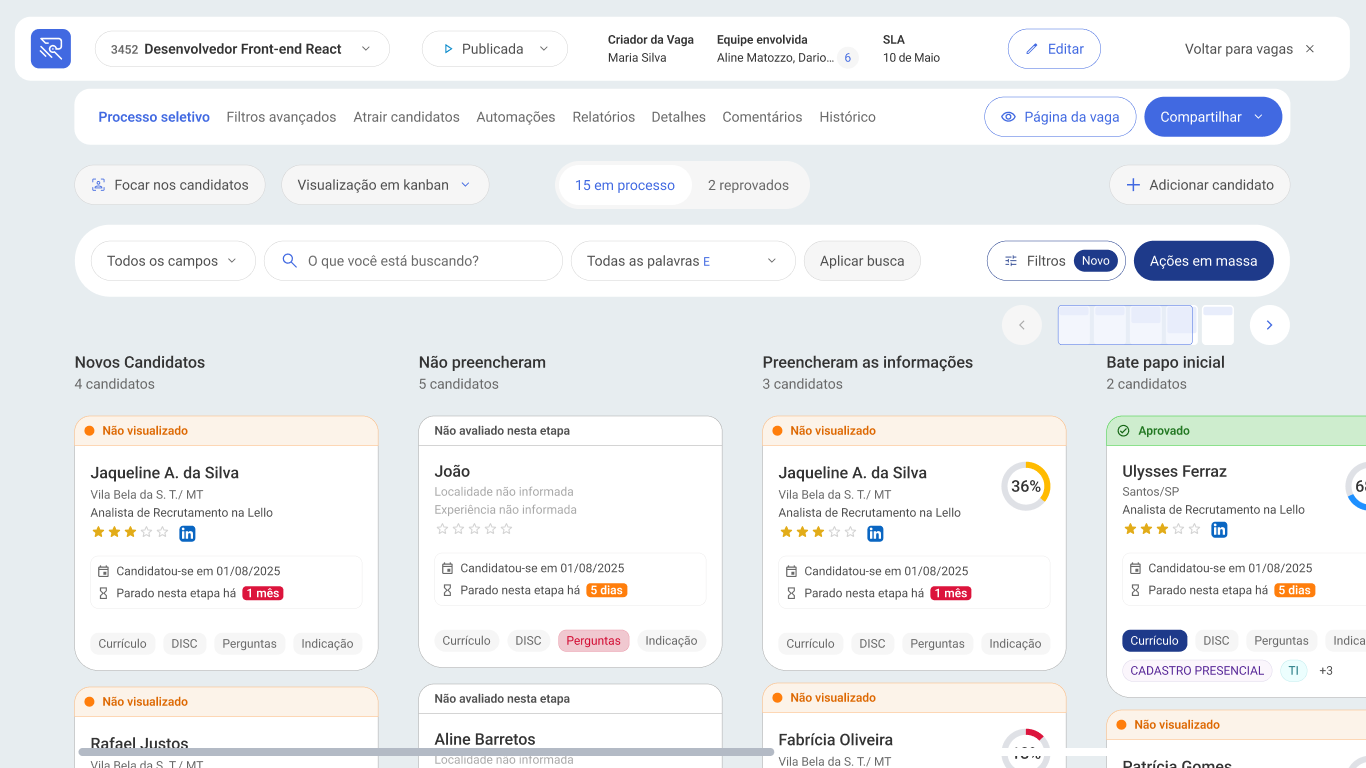
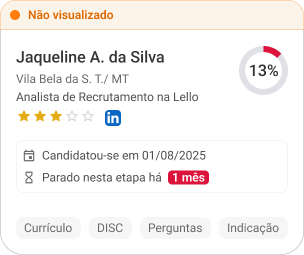
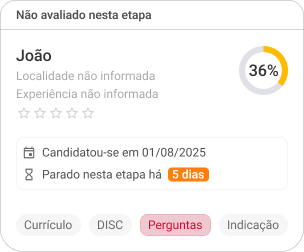
Additionally, we redesigned the entire screen to align it with the new system and strengthen interface credibility.
Before
After
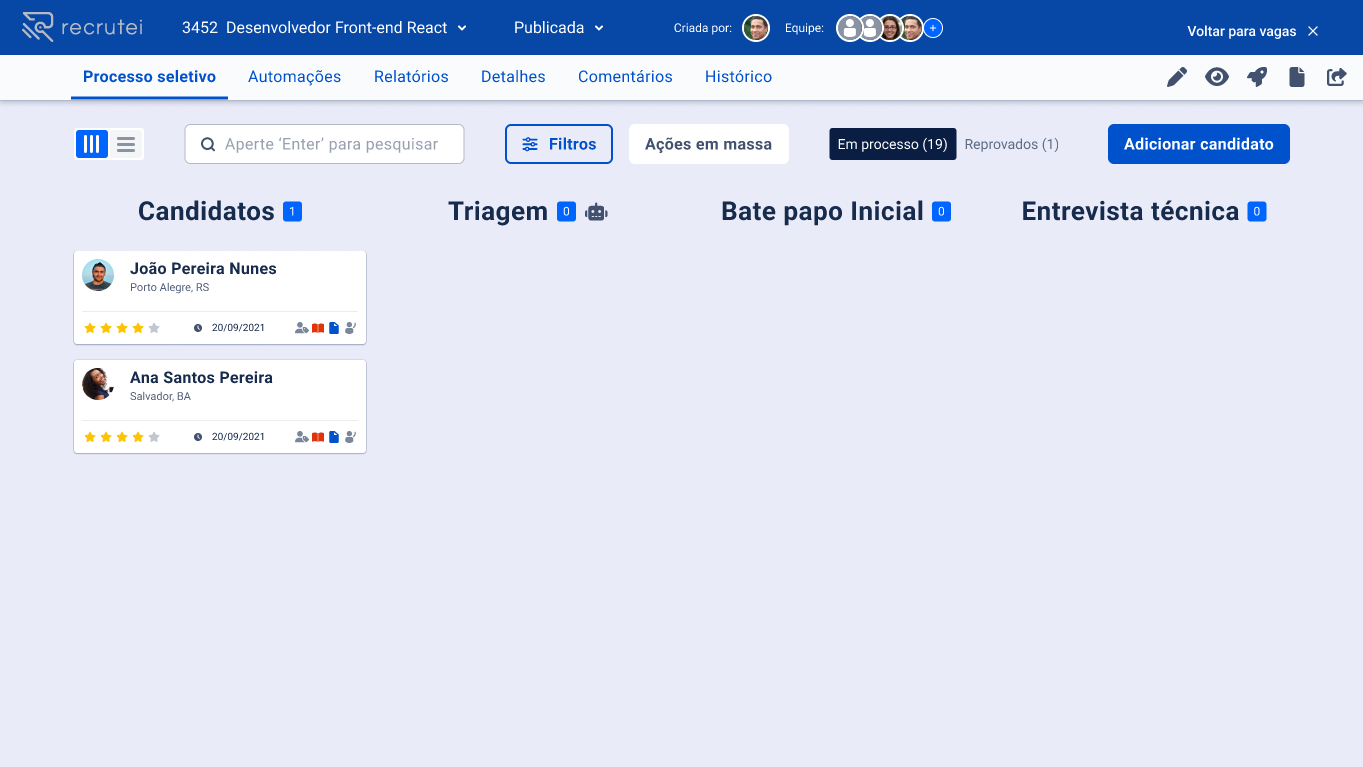
Antes
Depois
New Components
Search Field
Filter Chip with Counter

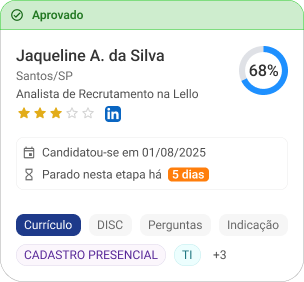
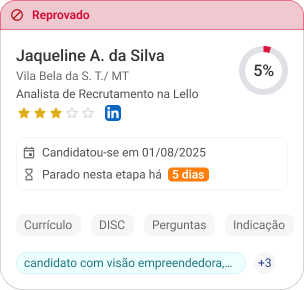
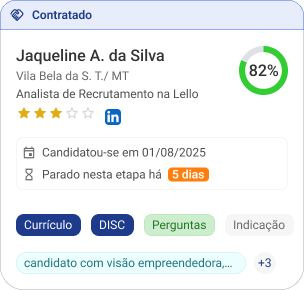
New Candidate Cards
Launch Trade-off
Despite potential value, we decided not to include the AI filter suggestion function in the first release.
Usage estimates indicated high token consumption, generating a recurring cost incompatible with the product margin at that time.
We opted to prioritize the redesign of manual search and filters, solutions with low operational cost and high immediate impact, leaving AI automation planned as a roadmap evolution.
Results
Results showed a clear impact: 73.80% increase in search component usage and greater perceived platform value, proving improvements made functionality more useful and relevant for recruiters.
Besides search, screening filters also saw a major leap: usage of this essential tool for effective screening went from 4 to 57 clicks in the same period — over 14x more interactions.
This growth shows the new flow made filters more accessible and relevant in recruiters' daily lives, helping decision-making with more speed and precision.
Success Metrics
search usage rate
more filter interactions
Data calculated from monitoring with Clarity tool
What we heard from recruiters
""Before I got lost in statuses, now I glance and know where each candidate is.""
""The combination of search and filters felt much more natural. I can quickly get to only the candidates that really make sense.""
""Screening became more fluid. I no longer need to keep going back and forth between screens to make decisions.""
Representative quotes based on verbal feedback received after launch.
Next Steps
During discovery of this feature, we identified that talent pool filters also needed redesign: the complexity of these advanced filters hindered usage causing usability issues. So for next sprints we should work on Talent Pool screens and flows.
Also, we conceived an AI automatic filter version, but opted not to include it in the first release due to high token costs, which would make the solution unviable today. This resource remains on the roadmap to be re-evaluated when cost per use is more sustainable.